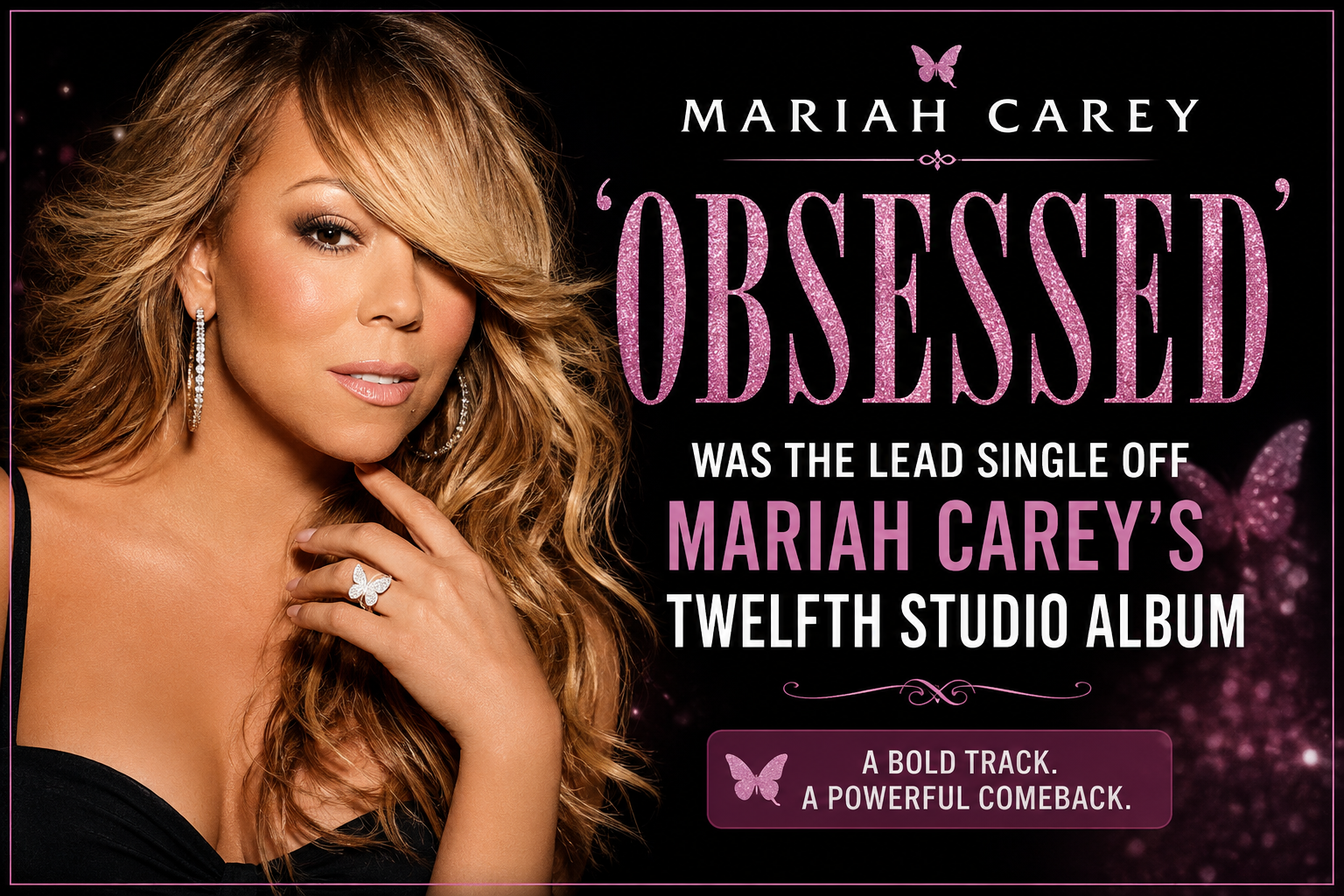
When discussing defining pop records of the late 2000s, Mariah Carey consistently appears as a central figure. Her ability to reinvent herself across decades has kept her relevant, and one standout example is Obsessed. "Obsessed" was the lead single off Mariah Carey's twelfth studio album, and it quickly became a cultural talking point upon release, capturing attention for both its sound and its sharp lyrical tone.
Released in 2009 as part of the album Memoirs of an Imperfect Angel, “Obsessed” arrived during a transitional moment in pop music. The industry was shifting toward digital consumption, and artists were experimenting with new sonic directions. Carey leaned into contemporary R&B and hip-hop influences, blending them with her signature vocal layering. The result was a track that felt modern while still unmistakably hers.
One of the reasons “Obsessed” holds a distinct place in pop history is its bold attitude. The song’s lyrics, widely interpreted as a response to comments made by Eminem, sparked widespread media coverage. This added a layer of narrative intrigue that extended beyond the music itself. Pop songs have long thrived on storytelling, but “Obsessed” blurred the line between personal expression and public spectacle, making it a defining example of how celebrity culture intersects with music.
Musically, the track showcased Carey’s adaptability. While she is best known for her soaring ballads and vocal range, “Obsessed” emphasized rhythm, repetition, and a catchy hook. The minimalist production allowed her layered vocals to create texture, proving that she could evolve with changing trends without losing her identity. This balance between reinvention and consistency is a hallmark of enduring pop artists.
The song’s music video further cemented its legacy. Featuring Carey in multiple personas—including a memorable male alter ego—it demonstrated her willingness to experiment visually as well as musically. At a time when visual branding was becoming increasingly important in the age of YouTube and viral content, this creative approach helped the song reach a broader audience.
Commercially, “Obsessed” performed well, charting internationally and becoming a staple on radio and in clubs. But its impact goes beyond numbers. It contributed to the ongoing conversation about how artists use their platforms to address rumors, criticism, and public perception. In doing so, it influenced how future pop stars would navigate similar situations.
In retrospect, “Obsessed” stands as more than just a hit single—it represents a moment when pop music, media narratives, and personal branding converged. For Mariah Carey, it reinforced her reputation as an artist who could remain relevant in an ever-changing industry. For pop culture, it serves as a reminder that sometimes the stories behind the music are just as compelling as the songs themselves.
Ultimately, “Obsessed” endures because it captures a specific era while still feeling relatable. Its wit, confidence, and catchy production continue to resonate, securing its place as a memorable chapter in the history of modern pop music.